






 Hotline
References
Membrane-Based WFI Technology
How Polymun combines efficiency, quality and sustainability with cold WFI technology
A best-practice project for biopharmaceutical production and sustainable infrastructure.
Your Contact
Tobias Herrmann

Water: A critical factor for quality and safety
Water is far more than an excipient in pharmaceutical manufacturing. As a central ingredient, it influences almost every process step, from product safety and process stability to compliance with strict regulatory requirements.
For Polymun, an internationally active biopharmaceutical company based in Klosterneuburg near Vienna, Austria, reliable and high-performance water treatment is therefore an indispensable part of the technical infrastructure. Among other things, Polymun develops and manufactures complex active ingredient formulations such as liposomal and lipid nanoparticle systems as well as biotechnological medicinal products, and was involved in the production of the mRNA vaccine Comirnaty® by BioNTech/Pfizer.
At the same time, water treatment is gaining strategic importance beyond its traditional function. When designing and modernizing pharmaceutical systems, long-term future viability is increasingly becoming a focus alongside water quality.
Against this background, Polymun needed not only to modernize its existing water treatment system technologically, but also to realign it in terms of capacity and energy efficiency in order to meet the growing demands for supply reliability and sustainability over the long term.
Initial situation: Proven, but with new development needs
The existing water treatment system from 2011 continued to meet all regulatory requirements, but was showing increasing operational limitations. Energy consumption, operating costs and limited capacity in particular proved to be limiting factors.
The system consisted of a generator for Purified Water (PW) based on reverse osmosis with electrodeionization (EDI), as well as thermal distillation for the generation of pure steam (PS) and Water for Injection (WFI). While Purified Water (PW) was produced and stored cold, WFI was generated thermally and then stored hot at 80 °C. The required process steam was generated using gas.
This system concept involved high energy demand and led to a strong dependence on fossil natural gas. At the same time, the existing design left little scope for flexible capacity expansion or sustainable further development of the infrastructure.

Dietmar Katinger
Managing Director of Polymun
Objective: More performance with significantly less energy
Against this background, Polymun defined a clear objective: the production capacities for Purified Water and Water for Injection were to be sustainably increased while significantly reducing the energy requirements of water treatment. At the same time, water treatment was to be realigned as an integral part of a future-oriented, resilient overall infrastructure.
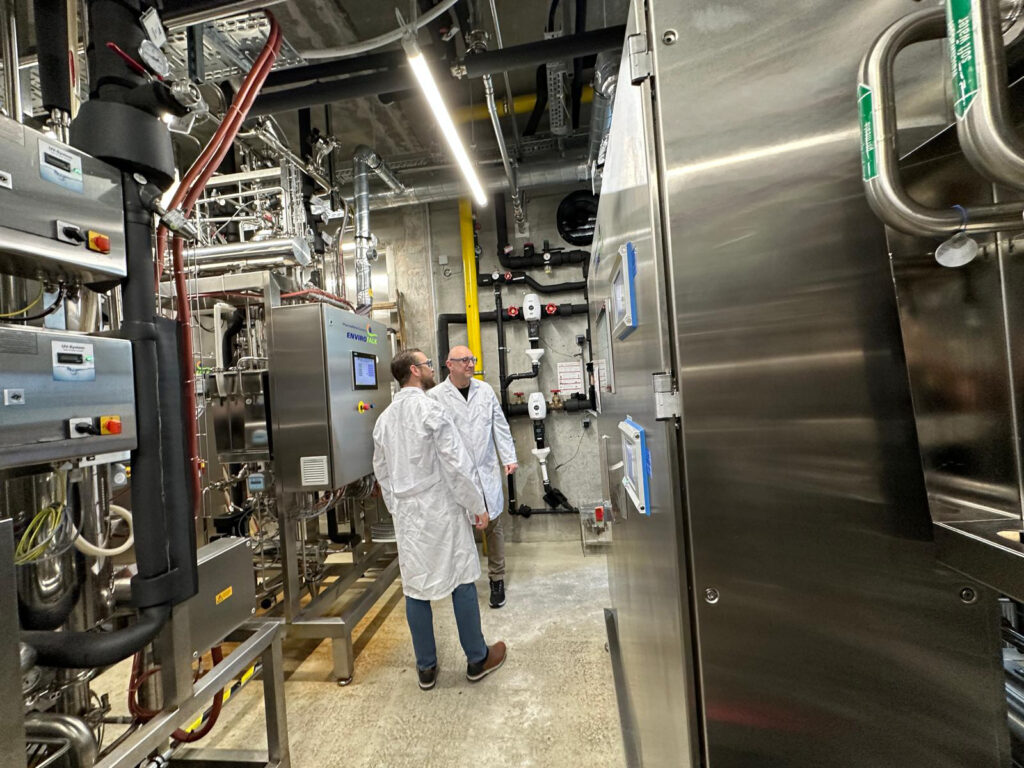
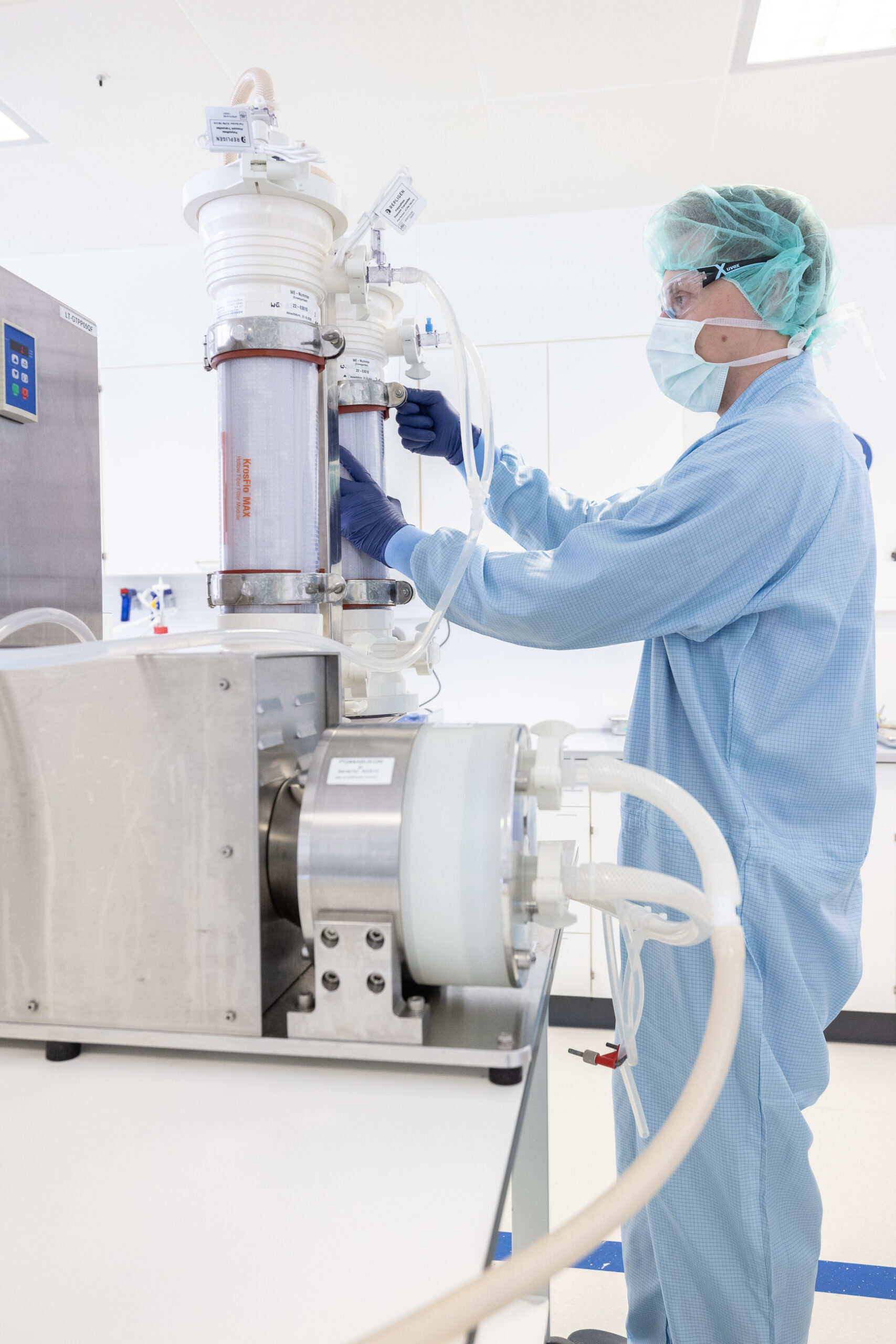
Production of Water for Injection (WFI) using reverse osmosis, electrodeionization and ultrafiltration in accordance with Ph. Eur. and USP.
Technological progress: Cold WFI as the key to efficiency
The new cold WFI generation system is based on advanced membrane processes that enable the highest water qualities without thermal process steps, with the exception of thermal sanitization. By combining reverse osmosis, electrodeionization and ultrafiltration, Water for Injection can be produced without thermal distillation in accordance with common standards, e.g. Ph. Eur. and USP. Typical operating values for this system are TOC in the lower ppb range and conductivity of around 0.05 to 0.10 µS/cm. The quality of the generated WFI is ensured through continuous online monitoring of conductivity and TOC as well as supplementary microbiological controls.
Eliminating continuous steam generation reduces system complexity and energy demand. Polymun also relies on electrically operated pure steam generation, which eliminates the need for gas-powered process steam.
Dietmar Katinger
Managing Director of Polymun
Sustainable water treatment
Polymun is an internationally active biopharmaceutical company based in Klosterneuburg near Vienna. The company specializes in the development and manufacture of complex biotechnological medicinal products as well as liposomal and lipid nanoparticle formulations.
Polymun was among the companies involved in the production of the mRNA vaccine Comirnaty® by BioNTech/Pfizer. Polymun operates a modern production and development infrastructure and consistently pursues the highest standards of quality, sustainability and efficiency.
Energy efficiency through the switch to electricity and cold WFI
With the new water treatment system, Polymun reduced energy consumption and dependence on fossil energy supply. While the previous system relied on process steam from a gas-based black steam generator, and therefore on natural gas, which in Austria is largely imported, the new concept consistently uses electricity as the primary energy source.
Because electricity in Austria is predominantly generated from renewable sources, this switch improves the energy efficiency and environmental footprint of water treatment.
A significant efficiency gain also results from the switch from hot-generated WFI stored at 80 °C to cold WFI. Energy-intensive hot generation and storage are completely eliminated. As a result, energy demand drops significantly while maintaining the specified limits for conductivity, TOC and microbiological parameters.
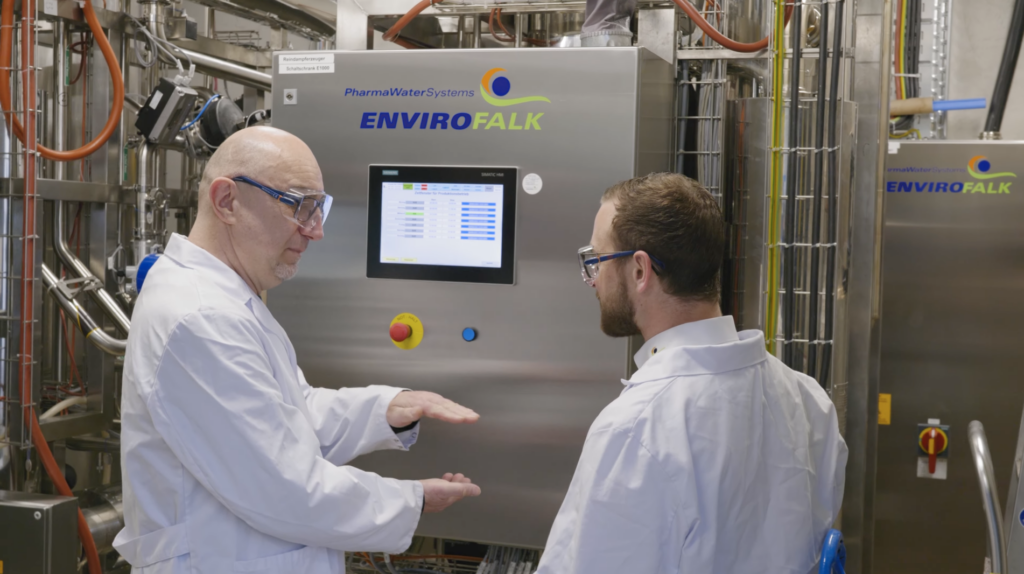
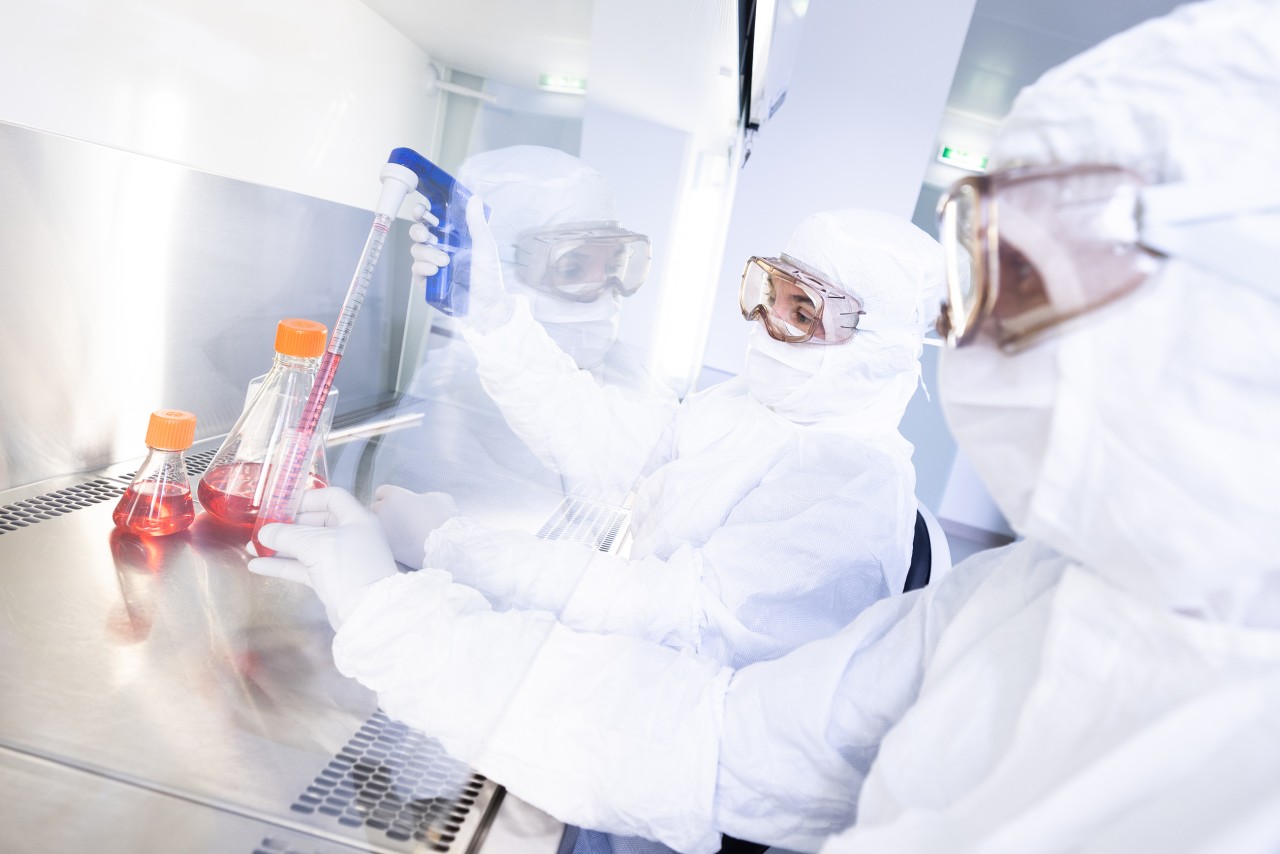
Developing customized solutions for pharmaceutical water treatment together.

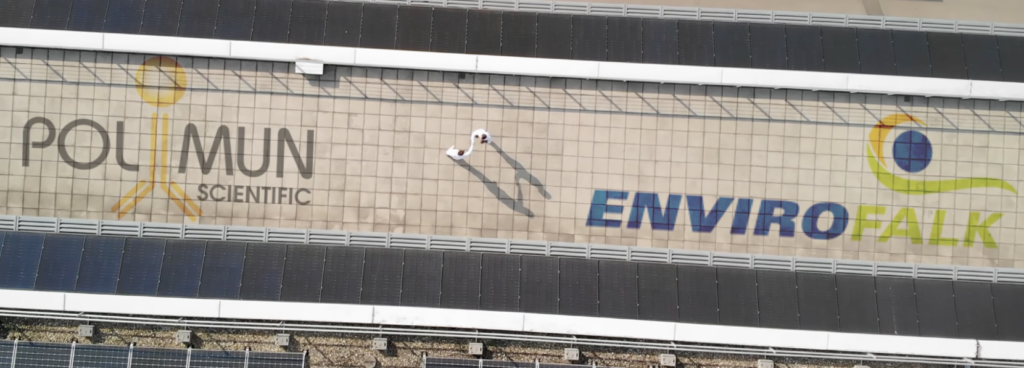
For a sustainable energy supply, Polymun uses solar power (photovoltaics) on site, gradually increasing the share of renewable energy.
Greater independence through renewable energy and photovoltaics
In addition, Polymun is specifically investing in its own energy generation: by expanding its photovoltaic system, an increasing share of the required electricity is generated sustainably directly on site. Water treatment therefore benefits not only from the renewable electricity mix, but increasingly also from self-generated renewable energy.
Overall, Polymun is reducing its dependence on fossil fuels and gaining further independence from the global energy market. In total, the conversion enables savings of around 1 GWh of gas per year.
Future-proofing through a holistic sustainability concept
The new pharmaceutical water treatment system is embedded in a comprehensive sustainability concept. In addition to the photovoltaic system already installed, further measures are planned, including the use of a heat pump to completely replace gas in building heating, as well as concepts for the intelligent use of waste heat from heating and cooling systems and from air-conditioned clean rooms.
Against the background of the growing importance of supply reliability and energy autonomy, Polymun shows that modern water treatment, sustainable energy supply and long-term production security can be combined in a technically and economically viable way.
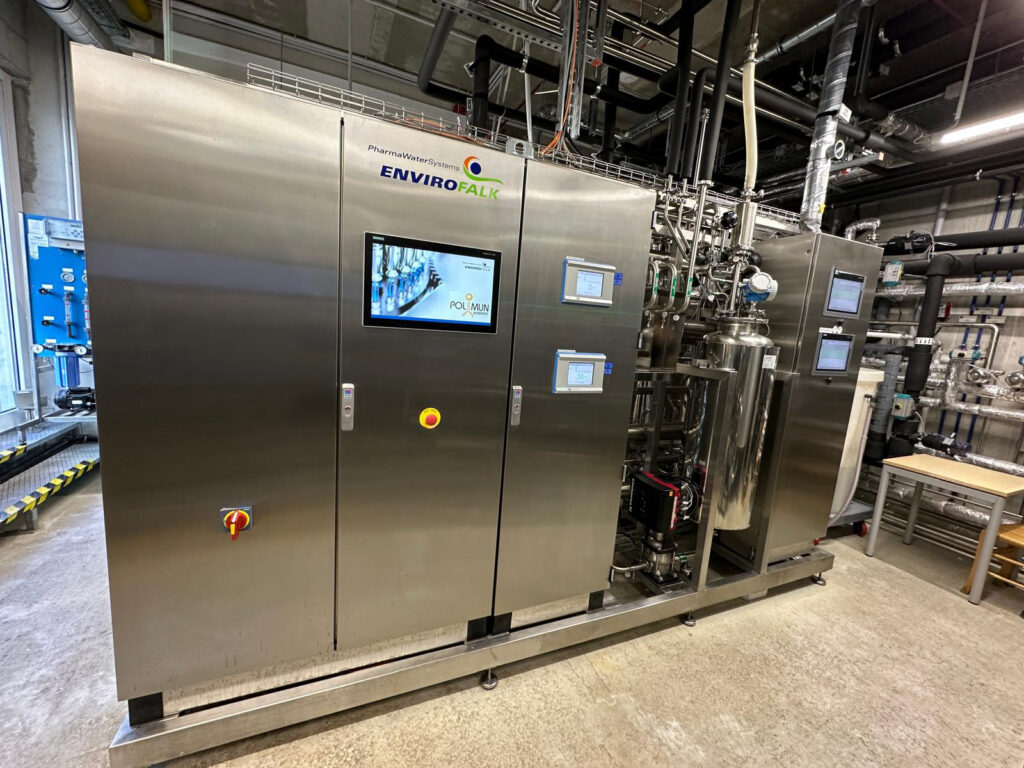
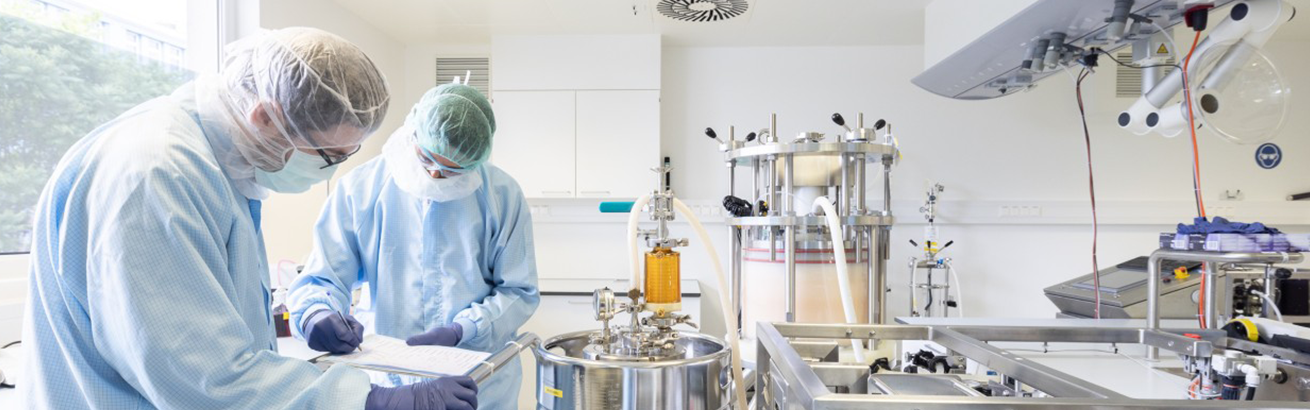
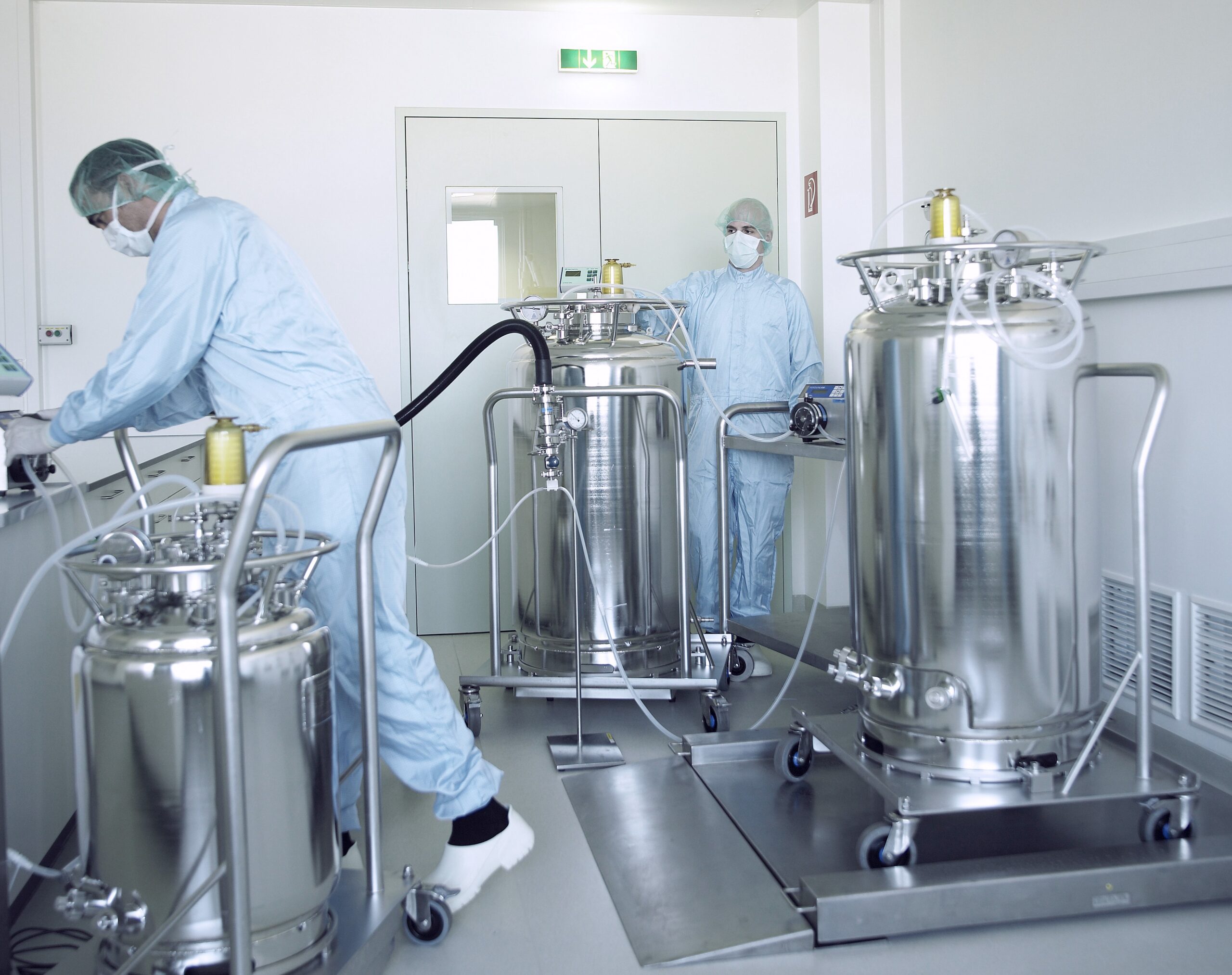
Pharmaceutical water treatment for biopharmaceutical production.
Success factor partnership: Polymun and EnviroFALK
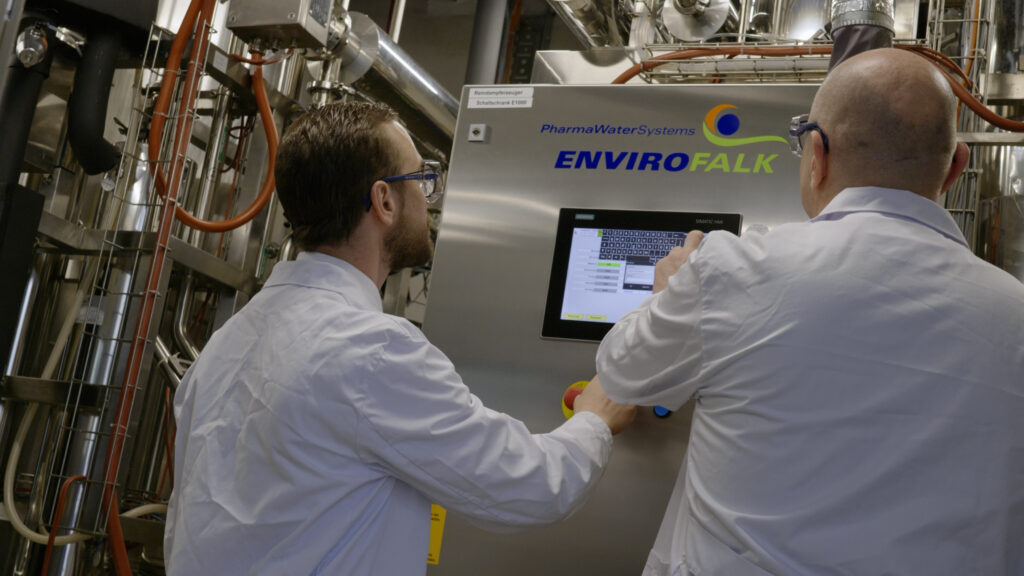
The project was implemented in close cooperation between Polymun and EnviroFALK. The requirements were complex because the new water treatment system had to be integrated into existing production structures without affecting ongoing processes. In a GMP-regulated environment, the planning, design and commissioning of such systems are particularly demanding. Successful implementation was only possible through precise coordination among all parties involved. Polymun placed particular emphasis on quality, flexibility and technical expertise — requirements that EnviroFALK met thanks to many years of experience in the pharmaceutical environment.
In addition to energy efficiency and sustainability, the time frame was also a key challenge. The conversion of the water treatment system was only allowed to affect ongoing pharmaceutical operations for a very narrowly limited time window. Planning, prefabrication, installation and commissioning therefore had to be precisely coordinated in order to minimize downtime and ensure supply reliability at all times.

Tobias Herrmann
Tobias Herrmann, Sales Engineer at EnviroFALK PharmaWaterSystems
Outlook: Future-ready infrastructure for biopharmaceutical production
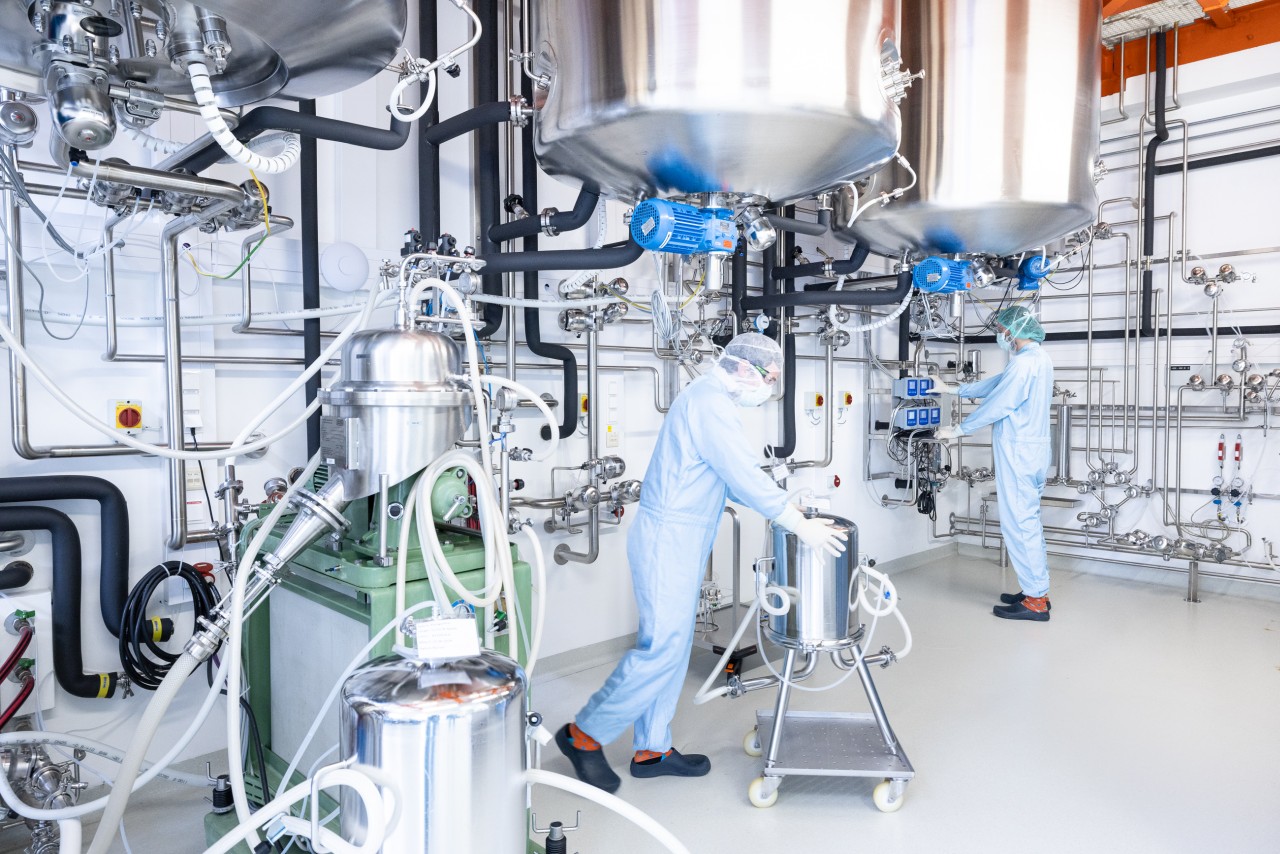
With the new water treatment system, Polymun has laid the foundation for future developments. The pharmaceutical water treatment system is designed to be more powerful and energy-efficient and makes a significant contribution to securing long-term supply. At the same time, it reduces dependence on fossil fuels and increases resilience to volatile energy markets.
Conclusion: Best practice for a sustainable industry
The project at Polymun demonstrates how technological innovation, energy efficiency and production reliability can be successfully combined. While maintaining the consistently high quality required by regulation, the introduction of cold WFI technology significantly increases the efficiency of water treatment. At the same time, it consistently supports the company’s sustainability strategy.
In cooperation with EnviroFALK, a solution was implemented that meets both current and future requirements. The project therefore provides a compelling best-practice example for the biopharmaceutical industry.
FAQ
Water for Injection (WFI) is highly purified water for pharmaceutical production. It is used for sterile medicinal products, biotechnological processes and sensitive production steps and must meet strict regulatory requirements.
Cold WFI refers to the production of Water for Injection without thermal distillation. Instead, modern membrane processes such as reverse osmosis, electrodeionization (EDI) and ultrafiltration are used.
Cold WFI significantly reduces energy consumption because continuous steam generation and hot storage are not required. At the same time, the high quality requirements according to Ph. Eur. and USP remain fully met.
Polymun wanted to expand production capacities, improve energy efficiency and reduce dependence on fossil fuels. The goal was a future-proof and sustainable infrastructure for biopharmaceutical production.
The new system combines reverse osmosis, electrodeionization (EDI) and ultrafiltration. This enables WFI to be generated efficiently and in GMP-compliant quality without thermal distillation.
By switching to cold WFI, Polymun saves around 1 GWh of gas per year. At the same time, operating costs and CO₂ emissions are significantly reduced.
Polymun is increasingly relying on electricity from renewable sources and is continuously expanding its own photovoltaic system. This means that a growing share of energy is generated sustainably on site.
Yes. The generated water quality meets the requirements of Ph. Eur. and USP. In addition, continuous online monitoring and microbiological controls ensure quality.
Pharmaceutical water influences product safety, process stability and GMP compliance. It is a central component of almost all pharmaceutical production processes.
 powered by